
Waterproof Tech
We out-engineer the rain.
A cover is only as waterproof as its weakest seam. Here is exactly how ours is built, and the lab evidence for every claim.
Heat-pressed, not stitched
Stitched seams leave needle holes, and every hole is a path for water. Our PVC panels are welded together with heat and pressure into a continuous, hole-free skin. This is the single biggest difference between a cover that stays dry and one that seeps at the shoulders after an hour of rain.
277.3 kPa of anti-seepage pressure
Hydrostatic pressure resistance is the standard measure of how hard water can push before it gets through a fabric. The GB pass line is 20 kPa. Our tested value is 277.3 kPa: roughly 13 times the minimum. That headroom is what keeps a parked bike dry through a storm, not just a drizzle.
tested · standard requires ≥ 20 kPa
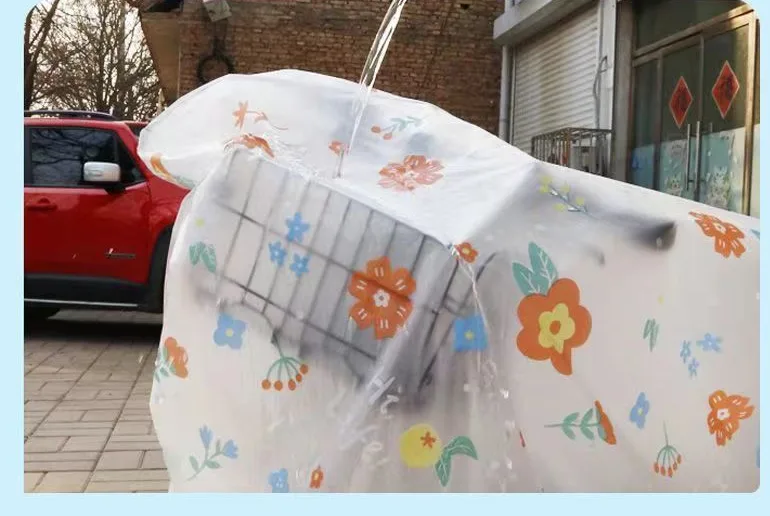
Lotus-effect quick-dry surface
The frosted PVC finish makes water bead up and roll off instead of soaking in. The cover sheds most of the water before you fold it, so it dries fast and packs down small into its storage pouch, and the frosted upgrade adds sun resistance so it does not go brittle.
Details that matter in daily use
Clear dashboard window
A high-clarity panel lets a rider read the speedometer and controls without lifting the poncho.
Detachable twin brim
A double brim keeps rain off the face; it unclips when you do not need it.
Elastic hem & drawcord
Covers grip the bike so wind does not lift them; ponchos cinch at the hood.
Storage pouch
Every cover folds into a matching pouch so it lives under the seat, ready for the next shower.
Want the numbers in writing?
We send the full CMA-accredited test report on request.
Request the test report